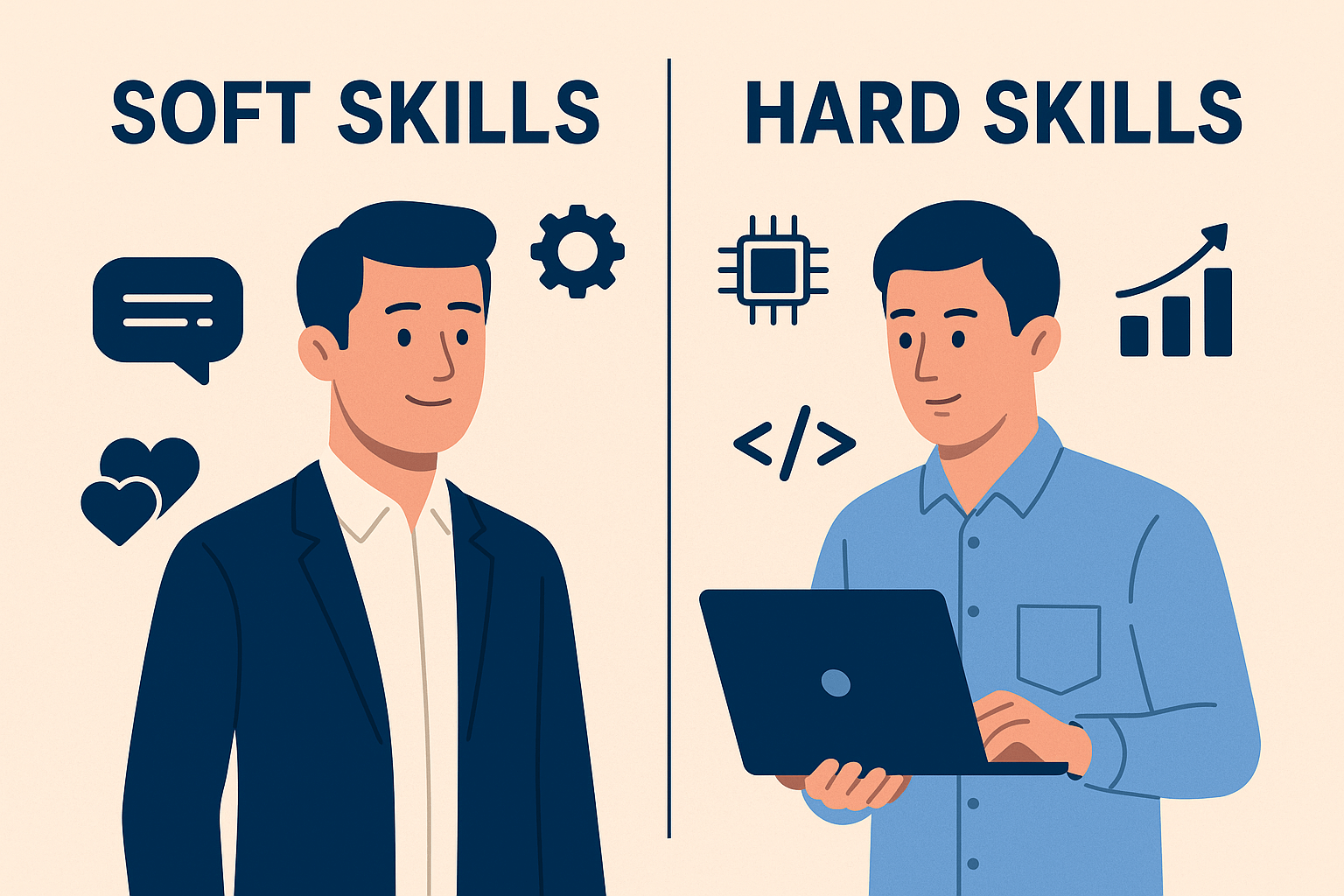
In today’s competitive job market, having the right skills can determine whether you get hired, promoted, or left behind. But when employers talk about the “right skills,” they don’t just mean technical abilities. They’re also looking closely at soft skills—traits that shape how you work, communicate, and collaborate with others.
So, which one is more important in today’s workplace: soft skills or hard skills? The truth is, both matter—but in different ways. Understanding the difference can help you build a stronger, more future-proof career.
What Are Hard Skills?
Hard skills are technical, measurable abilities you can learn through training, education, or hands-on practice.
Examples of hard skills
- Programming (Python, Java, PHP, etc.)
- Data analysis (Excel, SQL, Power BI)
- Graphic design
- Accounting or financial modeling
- Digital marketing (SEO, ads, content strategy)
- Engineering or mechanical skills
- Language proficiency
Why hard skills matter
- They show you can do the job.
- They’re easy for employers to test and measure.
- They often determine your qualifications for a specific role.
In many industries—technology, finance, healthcare, engineering—hard skills are essential just to get your foot in the door.
What Are Soft Skills?
Soft skills are personal traits and social abilities that affect how you work with others and how you handle daily challenges.
Examples of soft skills
- Communication
- Teamwork
- Leadership
- Problem-solving
- Adaptability
- Time management
- Critical thinking
- Emotional intelligence
Why soft skills matter
- They determine how well you work in a team.
- They help you handle stress, conflict, and rapid changes.
- They influence your career growth, promotions, and leadership opportunities.
As workplaces become more collaborative and fast-paced, soft skills are becoming just as important—sometimes even more important—than hard skills.
Which One Is More Important Today?
The short answer: You need both.
But the importance of each depends on your job and your career stage.
For entry-level roles
Hard skills often matter more at the start. Employers want proof you can perform the core tasks:
- Can you operate the tools?
- Can you run the software?
- Do you understand the basics?
For mid-level roles
Soft skills become more valuable. At this stage, teamwork, communication, and problem-solving determine how well you contribute to the company.
For senior and leadership roles
Soft skills often outweigh hard skills. Leaders are evaluated on:
- Decision-making
- Empathy
- Conflict resolution
- Mentoring
- Strategy
A manager with poor soft skills can ruin team morale—even if they are technically brilliant.
How Employers View Soft vs Hard Skills Today
Modern companies want employees who are balanced:
✔ Hard skills → ensure you can perform the job
✔ Soft skills → ensure you can work with people and handle challenges
A 2024 LinkedIn report found that 78% of hiring managers prioritize soft skills, especially communication and adaptability, because these traits are harder to teach.
Meanwhile, hard skills remain essential for productivity and industry-specific roles. In other words, soft skills get you hired—and hard skills keep you valuable.
How to Improve Both Skill Types
Strengthening hard skills
- Take certified courses
- Practice with real tools or software
- Work on personal projects
- Stay updated on industry trends
Strengthening soft skills
- Improve your communication through reading and practice
- Join group activities or team-based projects
- Ask for feedback from colleagues
- Practice emotional awareness and active listening
- Take leadership or public speaking workshops
Final Thoughts: The Perfect Combination Wins
Soft skills and hard skills are not competitors—they’re partners.
In today’s workplace, the most successful professionals are those who combine strong technical abilities with excellent interpersonal skills.
If you want to stand out:
- Build your hard skills to stay competent
- Strengthen your soft skills to stay relevant
- Combine both to stay irreplaceable